GROUND FROST (ROUTA)
SOAKAWAY WELL DESIGN
MANAGING THE SPRING THAW (KEVÄTSOHJO) & FOUNDATION SOIL
When March temperatures hit +8°C in Southern Finland, an average 180m² villa roof discharges over 8,000 liters of meltwater in three days. If ground soil is frozen solid 60cm deep, surface runoff will attack your basement foundation.
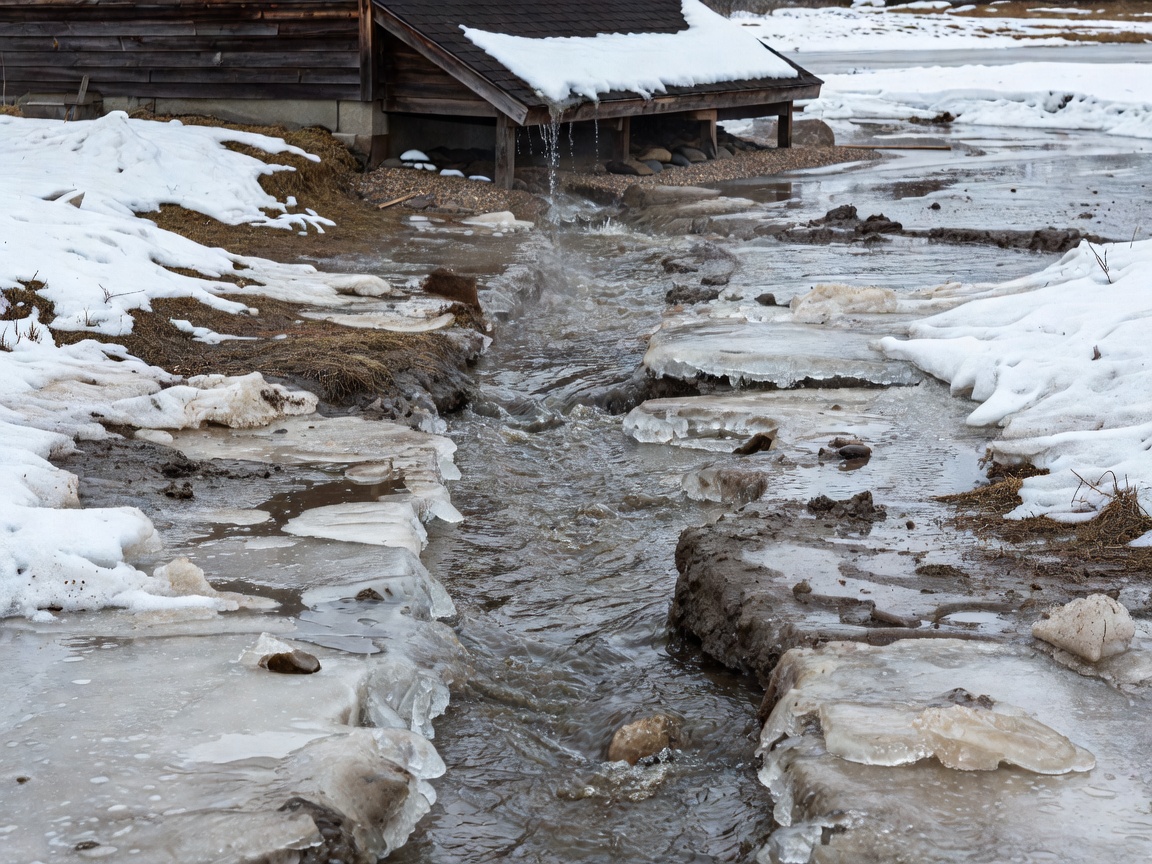
The Ground Frost Paradox (Routa)
In Finland, air temperatures frequently warm up weeks before subterranean soil thaws out. Because the clay and silt soils around your house are completely saturated and frozen into an impermeable ice block (routa), downspout discharge cannot seep into the topsoil. Water pools directly beside the foundation slab (sokkeli), generating hydrostatic pressure that forces moisture through micropores in the concrete.
The 4 Rules of Safe Spring Melt Discharge
To keep basements bone-dry during the spring thaw, follow these proven drainage principles:
- Minimum 3-Meter Separation: Downspout shoes should never terminate right beside the foundation wall. Route water through solid underground PVC pipes at least 3 to 5 meters away from the building perimeter.
- Frost-Protected Dry Wells (Imeytyskenttä): Soakaway crates must be installed beneath a protective layer of EPS/XPS foam insulation so the soakaway cavity remains thawed even when surface ground is frozen.
- Grading & Slope (Maan kallistus): Ensure topsoil slopes downward away from the foundation wall with a minimum 1:20 grade (5cm drop for every 1 meter of distance) over the first 3 meters.
- Integrated Leaf & Silt Baskets: Every subterranean downspout connection requires an easily accessible leaf basket to prevent spring mud and birch pollen from clogging buried pipes.
FIELD STATS
SPRING THAW VOLUME
| Snow Pack Water Equivalent: | 120 mm / m² |
| Average Villa Peak Flow: | 2,500 L / 24 hrs |
| Min. Frost Pipe Depth: | 0.8m to 1.2m |
| Discharge Distance: | Min. 3.0 meters |